News
SMC Speaker Series Celebrates 250 Years of Military Women
Published on April 15, 2026 - 12 p.m.
Women’s patriotic desire to serve is as old as America itself, but it took decades for their service to gain official recognition.
In 250 years from 1776 to 2026, women served in unofficial capacities during the Revolutionary War, the War of 1812, the Mexican-American War, the Civil War and the Spanish-American War.
Women provided official service in both World War I and II, Korea, Vietnam, the Cold War era, Desert Storm, Iraq, Afghanistan, Iran and the Middle East.
June 12 will be the 78th anniversary of the Women’s Armed Services Integration Act signed into law by President Harry Truman on June 12, 1948. Public Law 625 was landmark legislation which let women pursue military careers.
Many states, including Michigan, formally recognize women’s military service by proclaiming June 12 as “Women Veterans Recognition Day.”
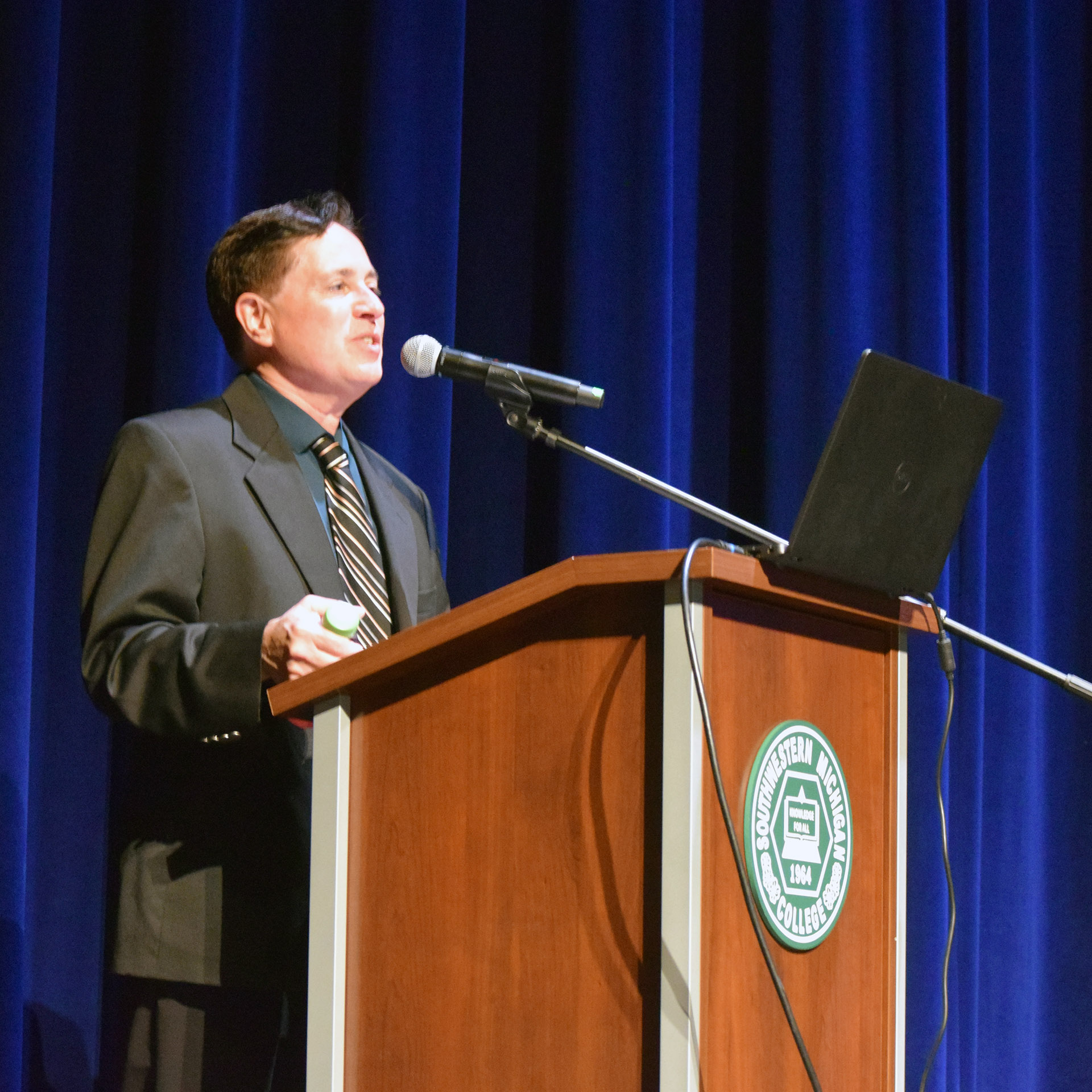
“Women were there from day one” in the fight for American independence from Great Britain, Laura Ritchie, adjunct professor at Jackson College told Southwestern Michigan College’s Academic Speaker Series April 14. “They weren’t enlisted, but they followed the Continental Army as nurses, serving meals, mending clothing and washing uniforms. They performed critical tasks and logistical support that allowed soldiers to focus on fighting. Some even cleaned cannons — an extremely dangerous job.”
The Revolutionary War lasted from 1775-83. Deborah Sampson, a Massachusetts woman, disguised herself as a man and fought for 17 months, was wounded twice in combat and was awarded a full military pension.
Margaret Corbin fought alongside her husband John defending Fort Washington in northern Manhattan. She took his place firing a cannon when enemy fire killed him.
During the Civil War (1861-65), women’s involvement was even more substantial, with 20,000 supporting the war effort. An estimated 1,000 women disguised themselves as men and fought on both sides. Women served as nurses, including Clara Barton, founder of the American Red Cross in 1881, and Dorothea Dix, who championed humane treatment of the mentally ill.
Harriet Tubman, whose network of safe houses known as the Underground Railroad rescued slaves, also organized spies for the Union.
Official recognition came during the Spanish-American War period (1898-1901), when 20 nurses of 1,500 who signed government contracts succumbed to typhoid, malaria and yellow fever.
“Women had proven their value on the battlefield and in hospitals,” Ritchie said. “Attitudes began to shift.”
In 1901, Congress established the Army Nurse Corps. More than 30,000 women served in World War I (1917-18); 12,000 as Army Nurse Corps nurses. The Navy and Marines let women enlist for the first time. Almost 12,000 served as yeomen (clerical workers) and telephone/radio operators. This service led to the women’s right to vote with the 19th Amendment of 1920.
Some 350,000 women served in World War II (1939-45), including 60,000 Army nurses and 14,000 Navy nurses. The Women’s Army Auxiliary Corps (WAAC) and Women’s Army Corps (WAC) were created in 1942 and in 1943; 150,000 served in England, France, Australia, New Guinea, the Philippines and North Africa.
The Navy created WAVES (Women Accepted for Voluntary Emergency Service). More than 84,000 women served, including intelligence and codebreaking.
The Women Airforce Service Pilots (WASP) saw more than 1,000 civilian women fly missions.
Sixty-seven Army nurses were captured by the Japanese in the Philippines and held as prisoners of war for nearly three years. Maj. Ella Daringer performed 230 surgeries and delivered 13 babies while imprisoned. There were 432 women killed in the line of duty and 88 taken as POWs.
When the draft ended in 1973, the transition to an all-volunteer force opened opportunities. In 1976, the military academies — West Point, Annapolis, Air Force — admitted women.
The Women’s Army Corps disbanded in 1978 and integrated into the regular Army. Women began graduating as fighter pilots and combat aviation officers.
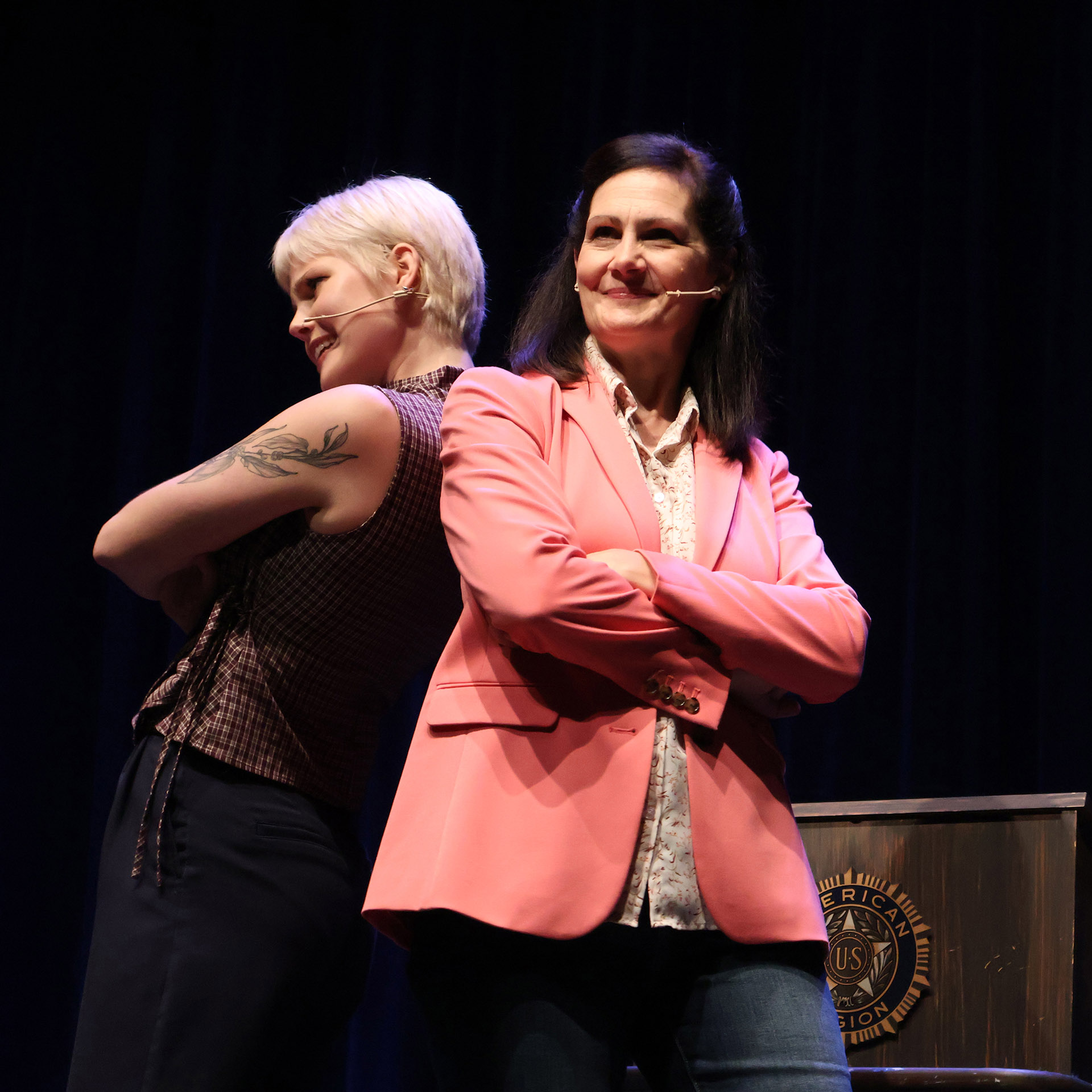
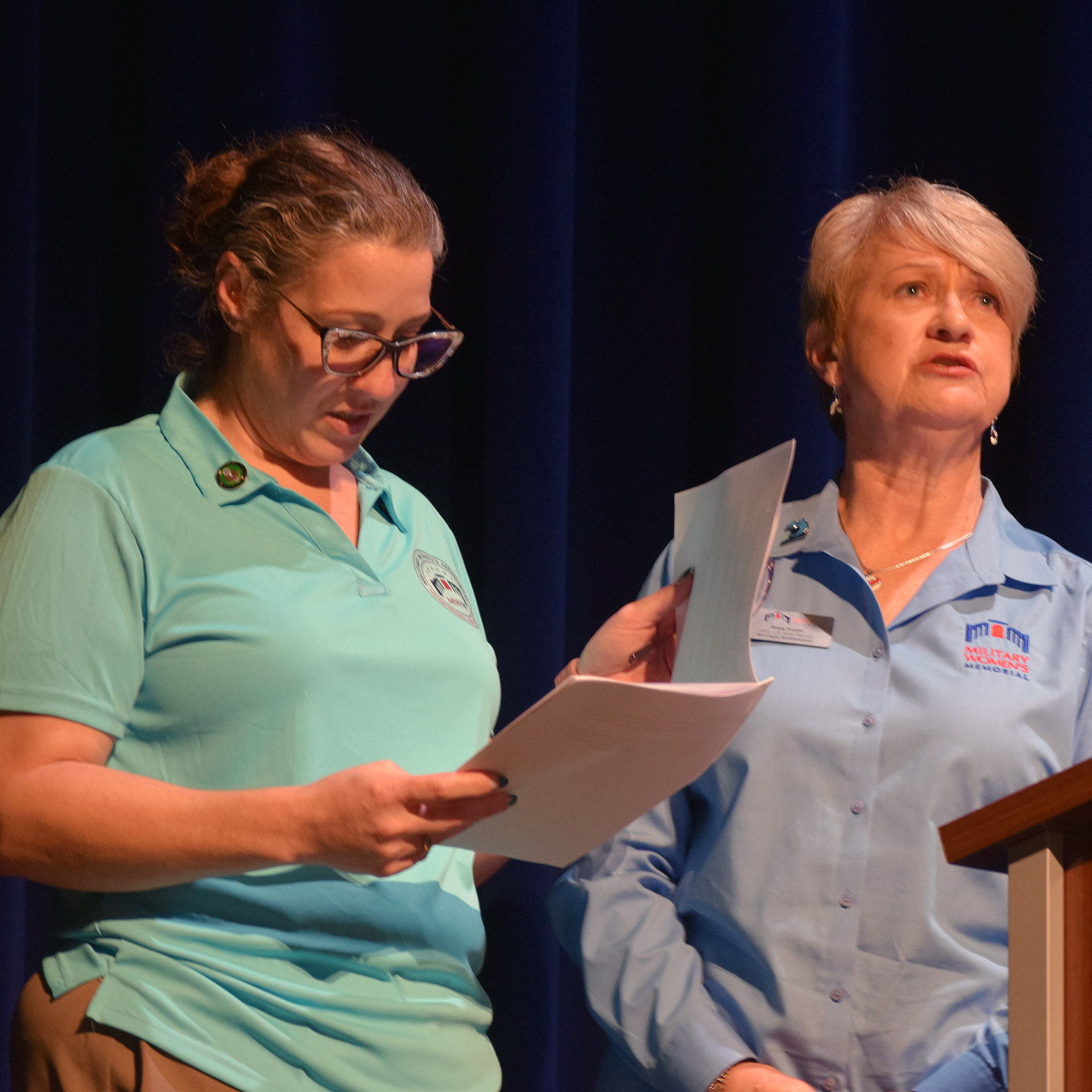
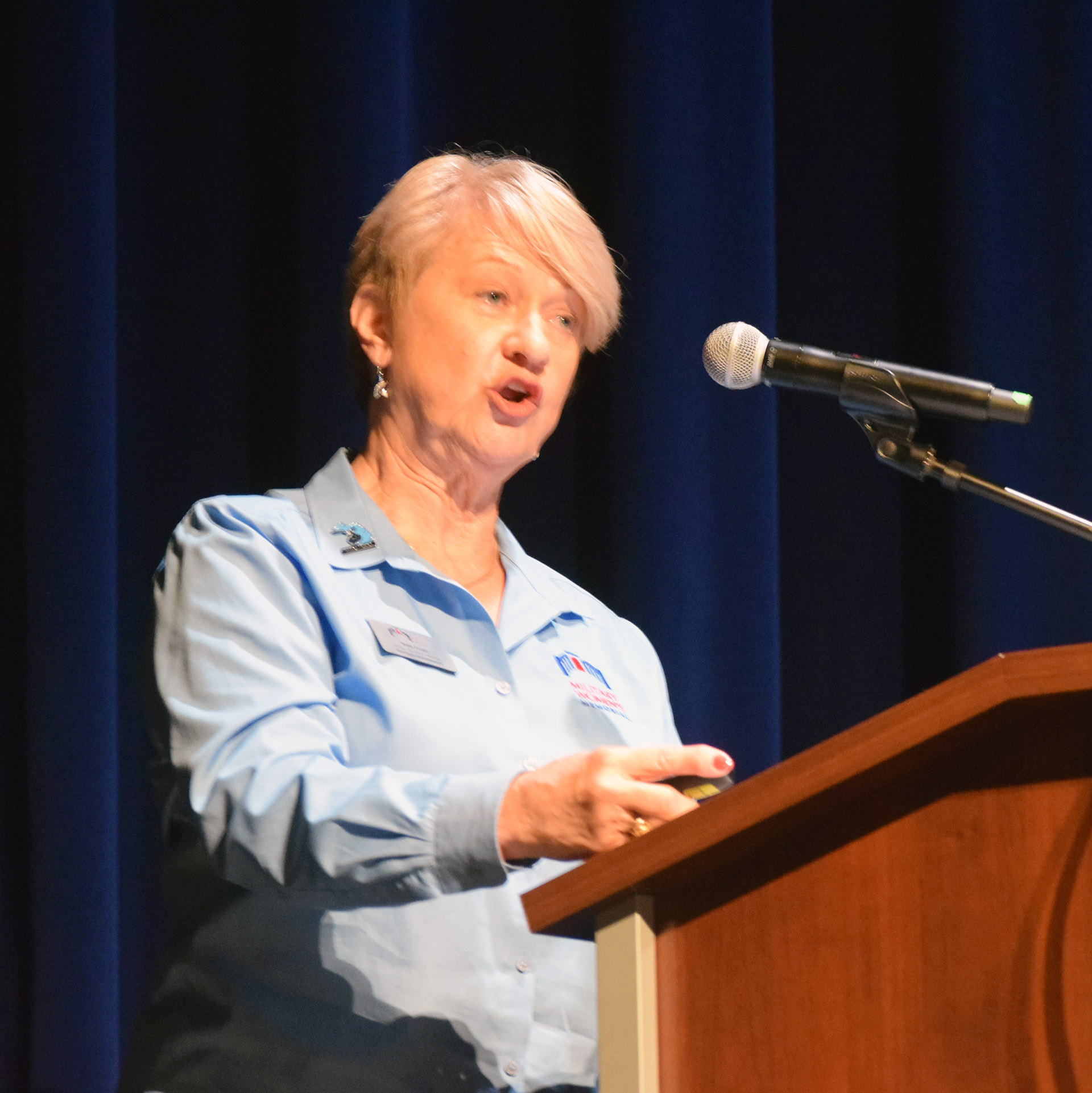
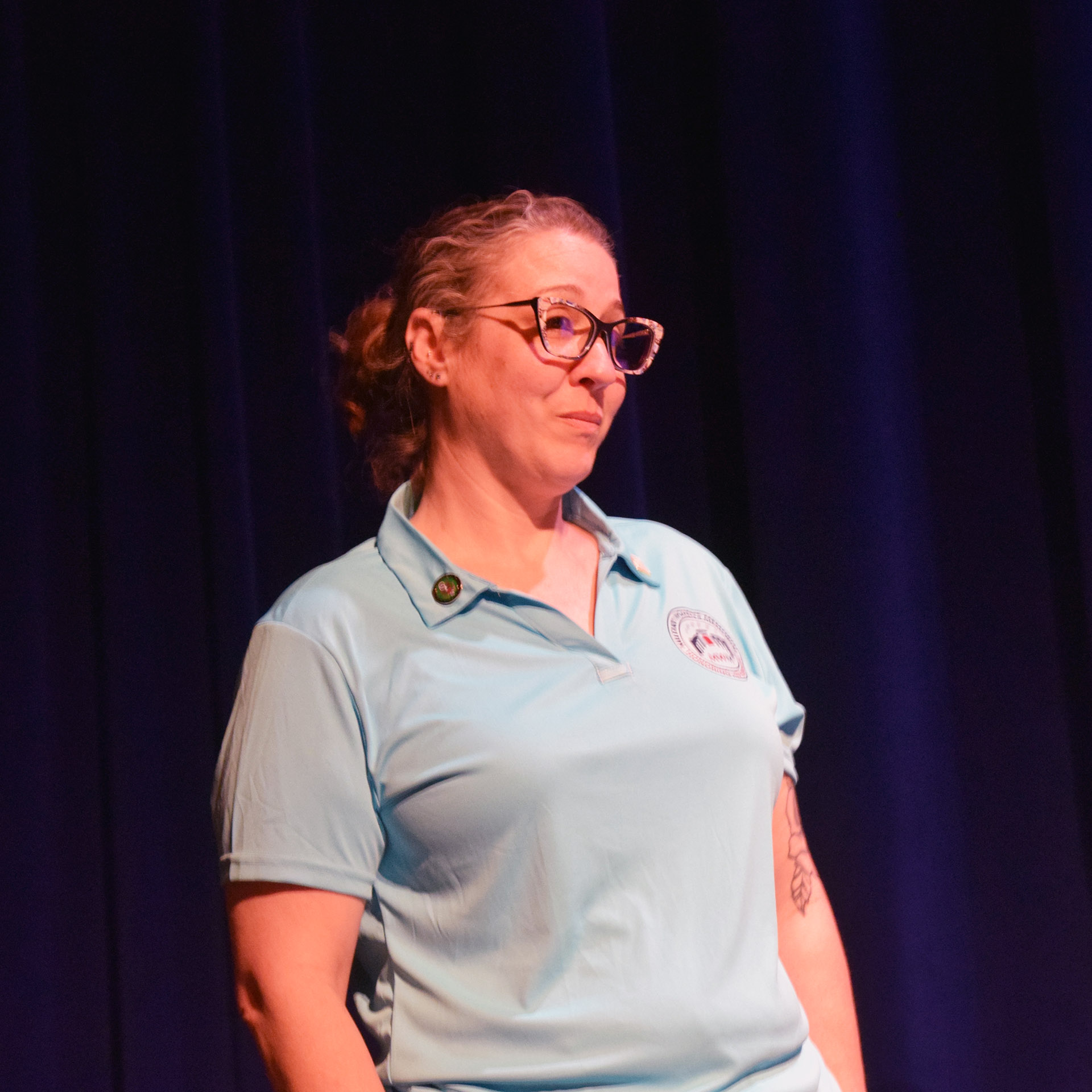
Ritchie, a former heavy construction equipment mechanic, and Rhea Pruett, Chief Warrant Officer Five (Retired) Army, visited SMC as Michigan ambassadors for the 1997 national Military Women’s Memorial in Arlington, Va.
The Military Women’s Memorial incorporates as its façade the historic Hemicycle, a retaining wall dedicated in 1932 as part of the Memorial Bridge project.
“More than 3 million women have served this country,” Pruett said, “with about 1.6 million still living in our country or still serving in uniform. It’s located near the entrance to Arlington National Cemetery.
“I served nearly 40 years with the Army and the Michigan Army National Guard, retiring in 2014. I was 18 when I entered basic training at Fort McClellan, Ala.,” Pruett said.
Pruett said more than 350,000 women are registered with the Military Women’s Memorial, preserving their stories, “which is barely 10 percent of those who served. It costs nothing to register and means so much by honoring her service. Every woman who has served and sacrificed in defense of our nation made history that deserves to be told. We shine a light and make them visible. When you’re visible, you cannot be ignored.”