News
Roadrunners in Ohio, Va., Pa., D.C., to Ring in Semiquincentennial
Published on May 15, 2026 - 10 a,m.
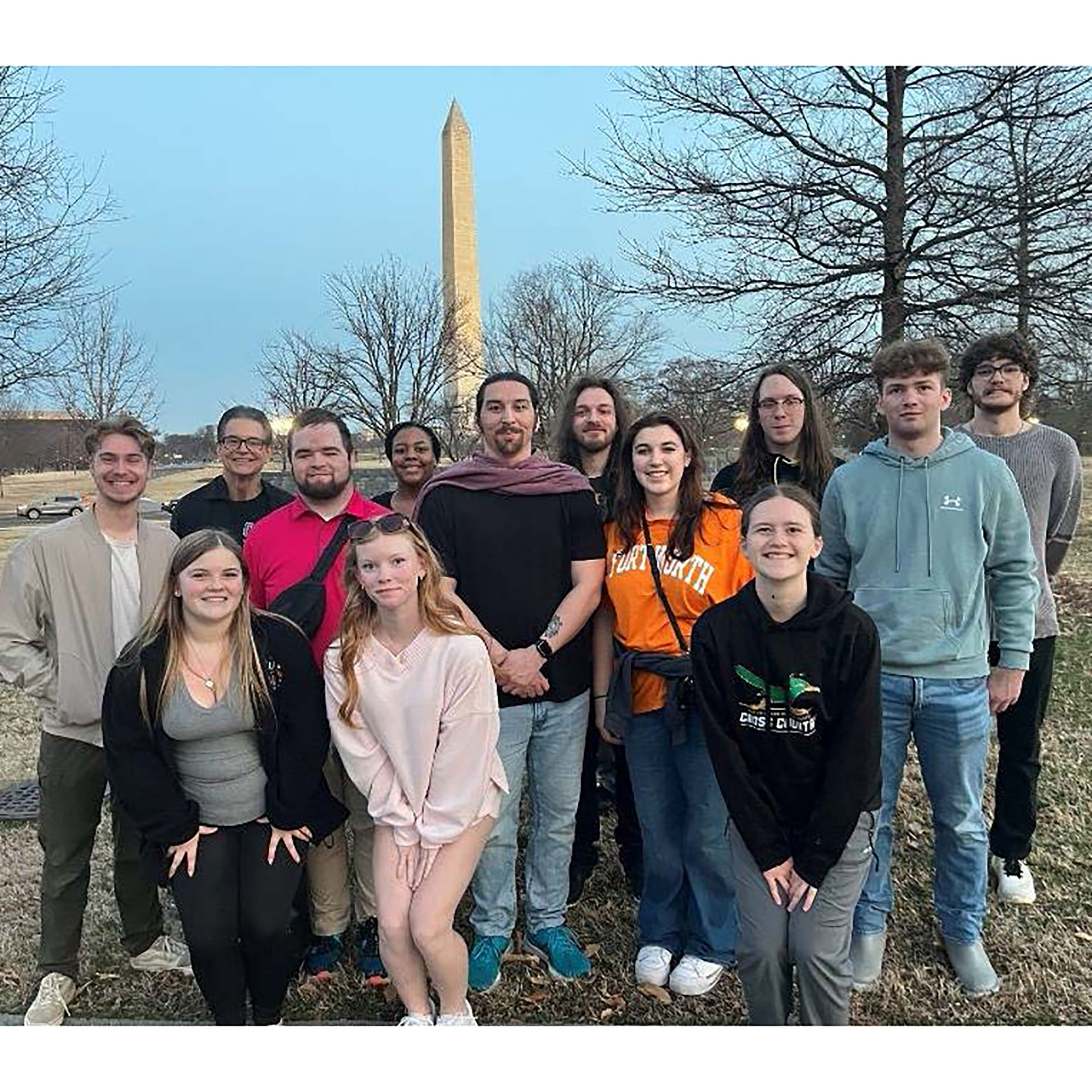
This year’s Southwestern Michigan College extended learning experience prepared history students for the Semiquincentennial, the 250th anniversary of America (1776-2026), by visiting Ohio, Virginia, Pennsylvania and Washington, D.C., March 5-8.
SMC underwrites lodging, touring, lunch and transportation costs for students on these co-curricular trips.
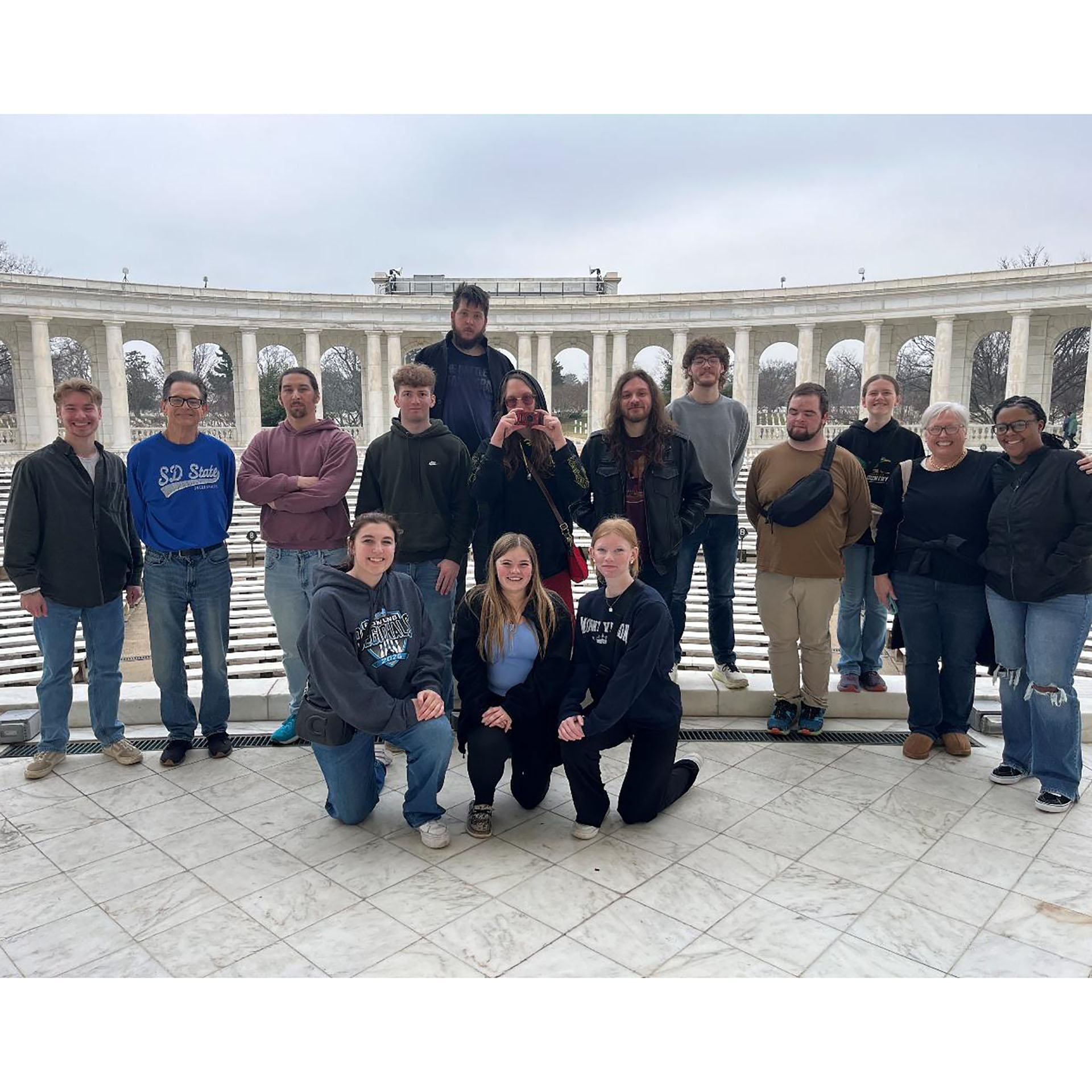
The group, led by Professors Jeff Dennis, Natalie Anagnos and Don Ricker, included students Mahayla Brown, LaMaya Davis, Amelia Hurst, Caitlin Jones, Brandon Amason, Silas Dobson, Thayne Palmer, Thorin Palmer, Carson Shugars, Aden Weber, Chris Witt and Austin Zepeda.
The first day took in the Bicycle Museum of America in New Bremen, Ohio, and the U.S. Air Force Museum in Dayton.
Bicycles played a major role in both World Wars transporting dispatches while avoiding enemy fire.
At the Air Force museum, hangars are arranged chronologically, spanning everything from the first hot-air balloon flights to today’s high-tech innovations. They also watched an IMAX film commemorating D-Day.
From Dayton, the Roadrunners trekked east, making Wheeling, W. Va., by dinner. Then they wound their way through mountains shrouded by heavy rain and dense fog into Maryland. Shortly after midnight, the travelers reached their destination, Alexandria, Va.
March 6 SMC saw Mount Vernon and Arlington National Cemetery in northern Virginia, and the Basilica of the National Shrine at Catholic University of America in Washington.
George Washington’s estate marked the first stop on day two. They saw the Bastille key from the opening of the French Revolution, gifted by Lafayette to Gen. Washington in 1789. Mount Vernon’s weathervane, shaped as a dove of peace, is another notable artifact.
Mount Vernon’s 11,000 square feet of floor space is over 10 times the average size of an 18th-century Virginia home, including a pillared piazza overlooking the Potomac River.
While wealthy, Washington was financially frugal. For example, the exterior is designed to fool visitors into thinking it is expensive white stone when the façade is actually beveled pine board coated in sand.
March 7’s itinerary included D.C. sites of Ford’s Theatre, the National Portrait Gallery, the museums of Natural History and American History and Mall monuments and memorials.
SMC surveyed the battlefield and cemetery as well as the museum and cyclorama at Gettysburg National Park on March 8.
On Friday and Saturday, SMC relied on the Metrorail to navigate D.C., though access to the Yellow Line was a mile from their hotel.
The next objective was Arlington National Cemetery, viewing the service at the Tomb of the Unknown Soldier, the graves of President Kennedy and his family and Arlington House, where Robert E. Lee lived.
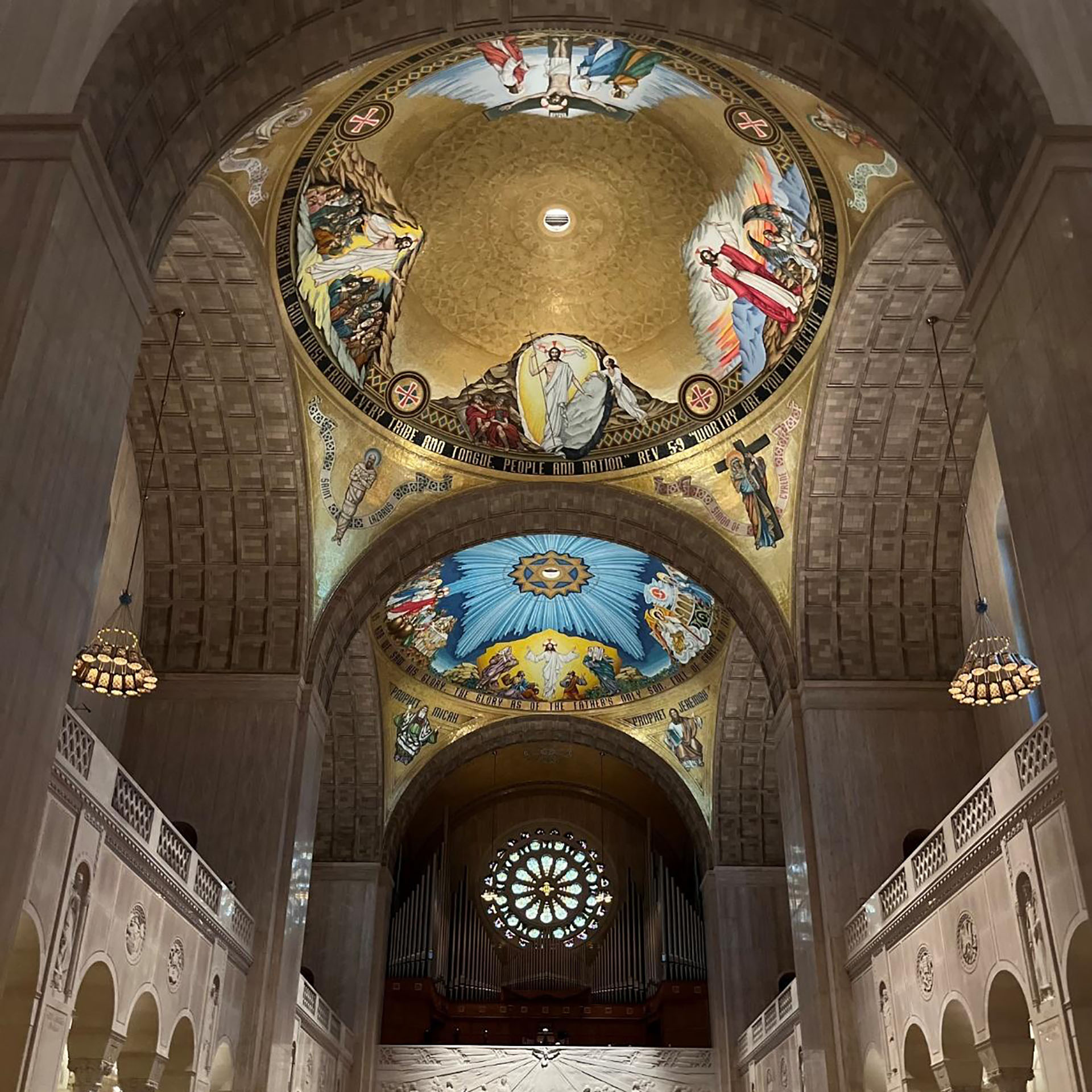
The Basilica of the National Shrine is the country’s largest cathedral, an elegant amalgam of Romanesque and Byzantine design viewed by 1 million visitors annually.
They ate an evening buffet meal on the campus of Catholic University of America in Garvey Hall, CUA’s principal dining facility.
March 7 proved the busiest day, beginning with a visit to Ford’s Theatre, site of President Lincoln’s assassination. It is carefully maintained to look much as it did in 1865 and continues to stage live productions.
From Ford’s Theatre they walked to the American Portrait Gallery, a Smithsonian museum that houses paintings and sculptures of famous citizens, including all U.S. presidents.
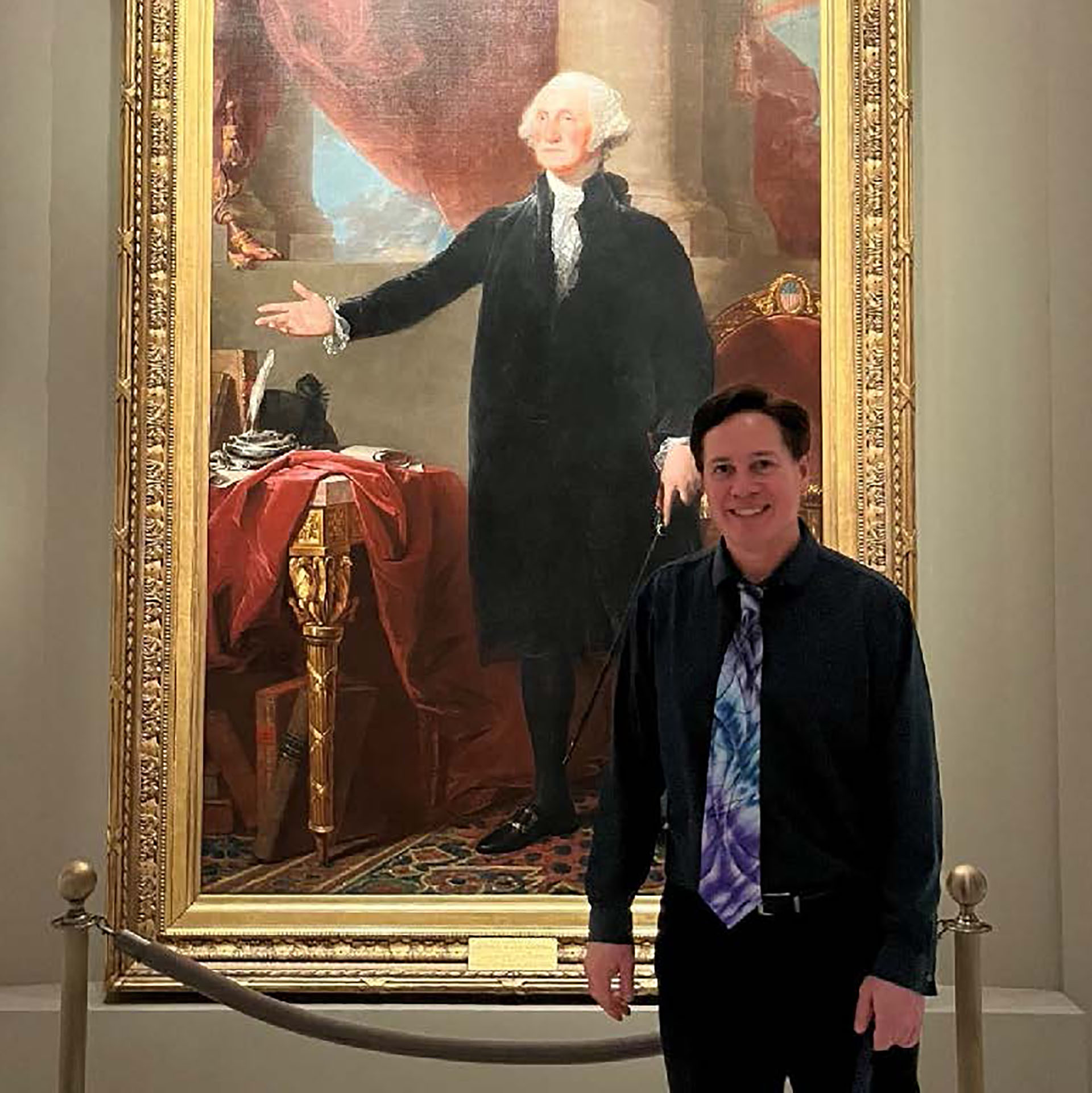
Chloe and Jeff Dennis enjoyed the Portrait Gallery. Chloe snapped a picture of her dad standing in front of Washington’s. Jeff was born on the first president’s birthday, which helped pique his interest in history from a young age.
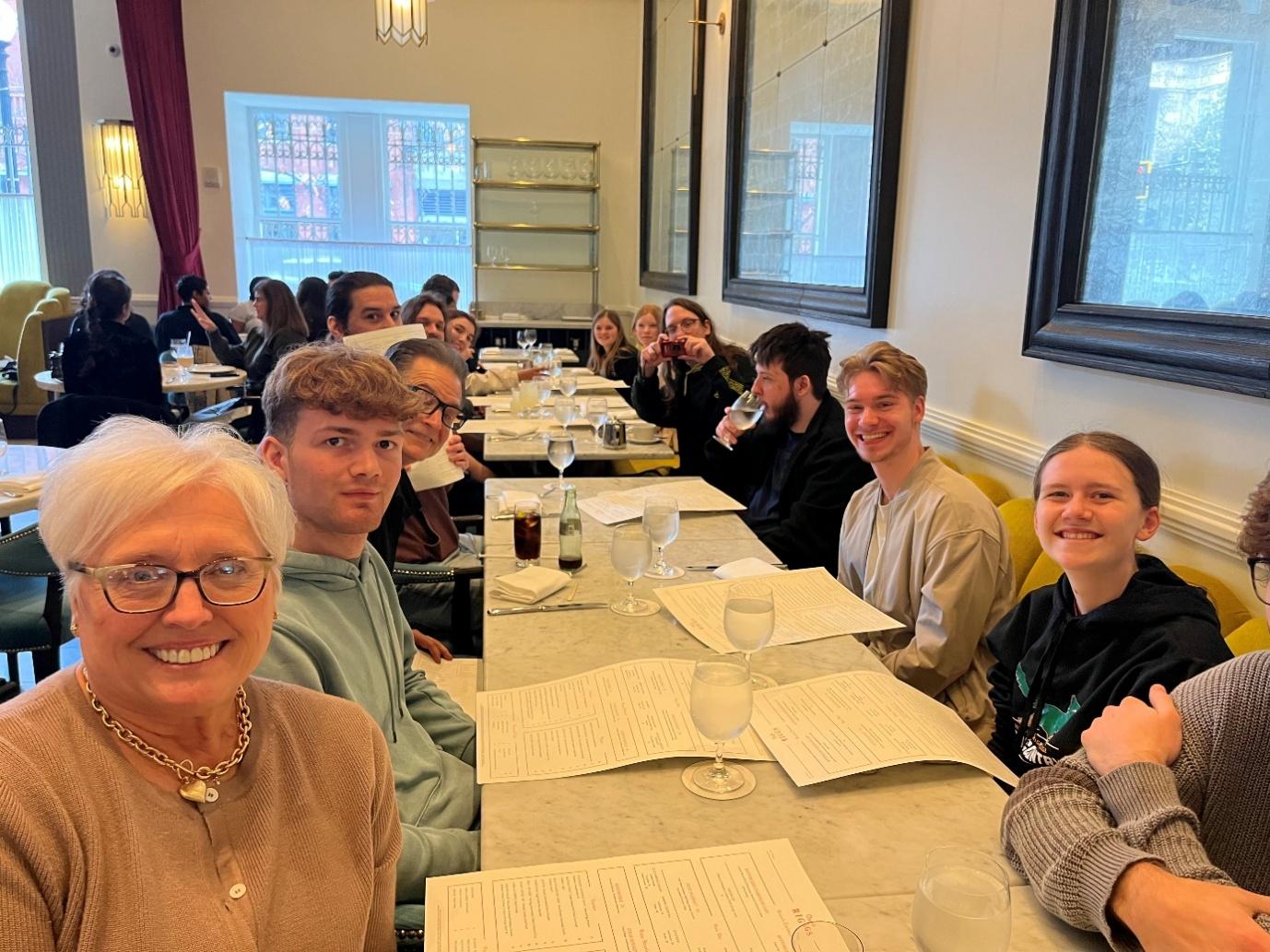
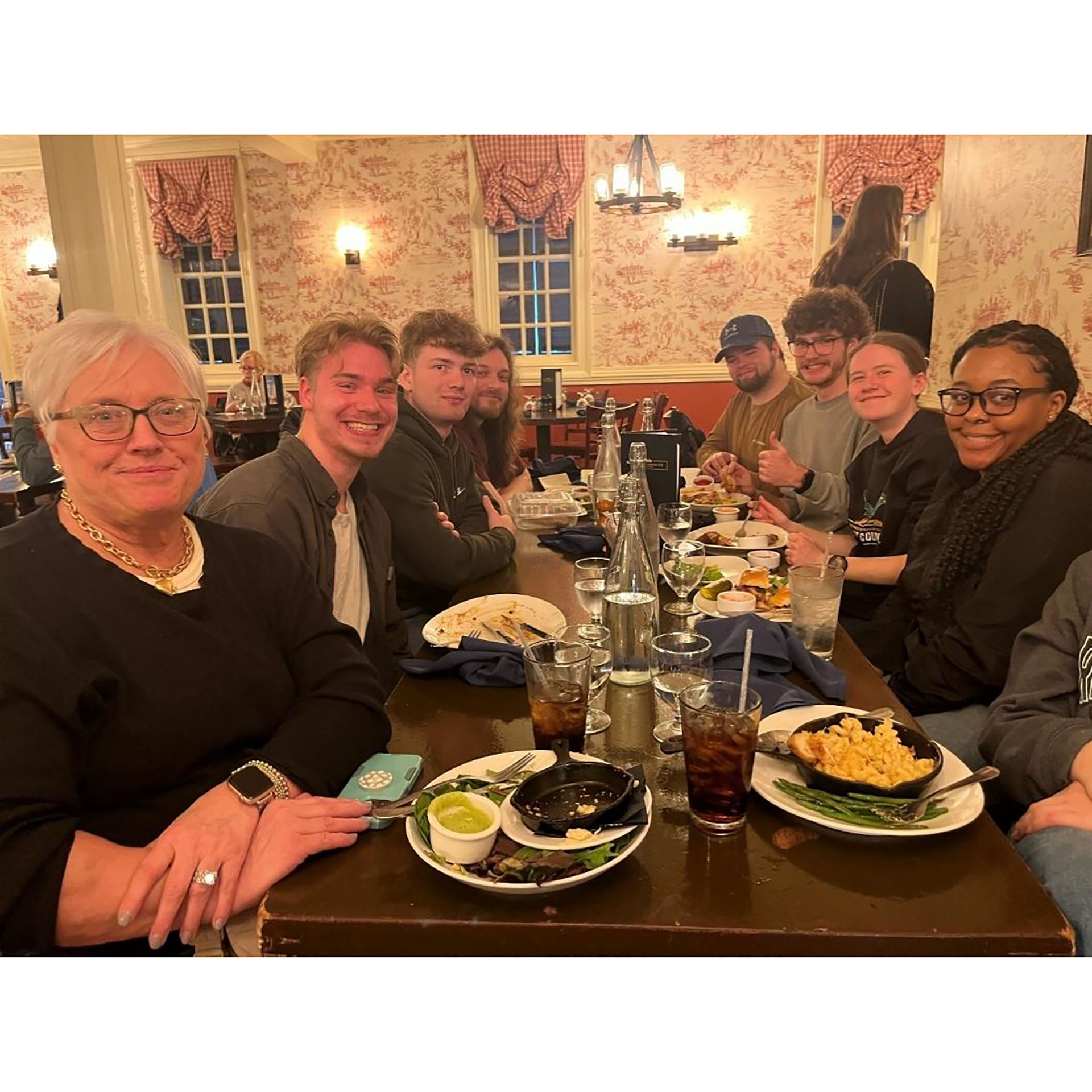
The group enjoyed brunch at Riggs Café, a national bank converted into a hotel/brasserie. As a bank, it managed the personal accounts of 23 presidents and processed the $7.2 million payment in gold to purchase Alaska from Russia in 1867.
Neighboring Natural History is the Smithsonian Museum of American History, a repository for the original “Star-Spangled Banner” which flew through the night of Sept. 13-14, 1814, in defiance of the British “rockets’ red glare”; a Teddy Roosevelt-era “Teddy Bear”; the Apollo 11 command module; First Ladies’ inaugural gowns; Dorothy’s ruby slippers from the Wizard of Oz; the stovepipe hat Lincoln wore to Ford’s Theatre; Washington’s Revolutionary War uniform; and classic American automobiles.
They hiked 12 miles along the Mall viewing monuments and memorials, with White House construction adding three.
The sojourn “solidified how much history means to me and brought learning I cannot obtain sitting in a classroom,” Brown said. “I want to teach history.”
“The trip was full of things I will remember for the rest of my life, like seeing the plane that dropped the atomic bomb, standing in front of the original Star-Spangled Banner, spending a quiet moment at Washington’s grave and feeling the wind on my face on the open fields of Gettysburg,” Amason said.
“I would absolutely recommend this experience to anyone who has the opportunity to go,” Davis said.
“We had the opportunity to gaze into the looking glass of the past,” Zepeda said. “I felt as though I could see for a moment why they felt this land was worth fighting for.”
Destinations for past versions of the history trip have included Virginia, Michigan, Cincinnati, Kentucky, Iowa, South Dakota, Wyoming, Ohio, West Virginia, South Carolina, Tennessee, St. Louis and Illinois.
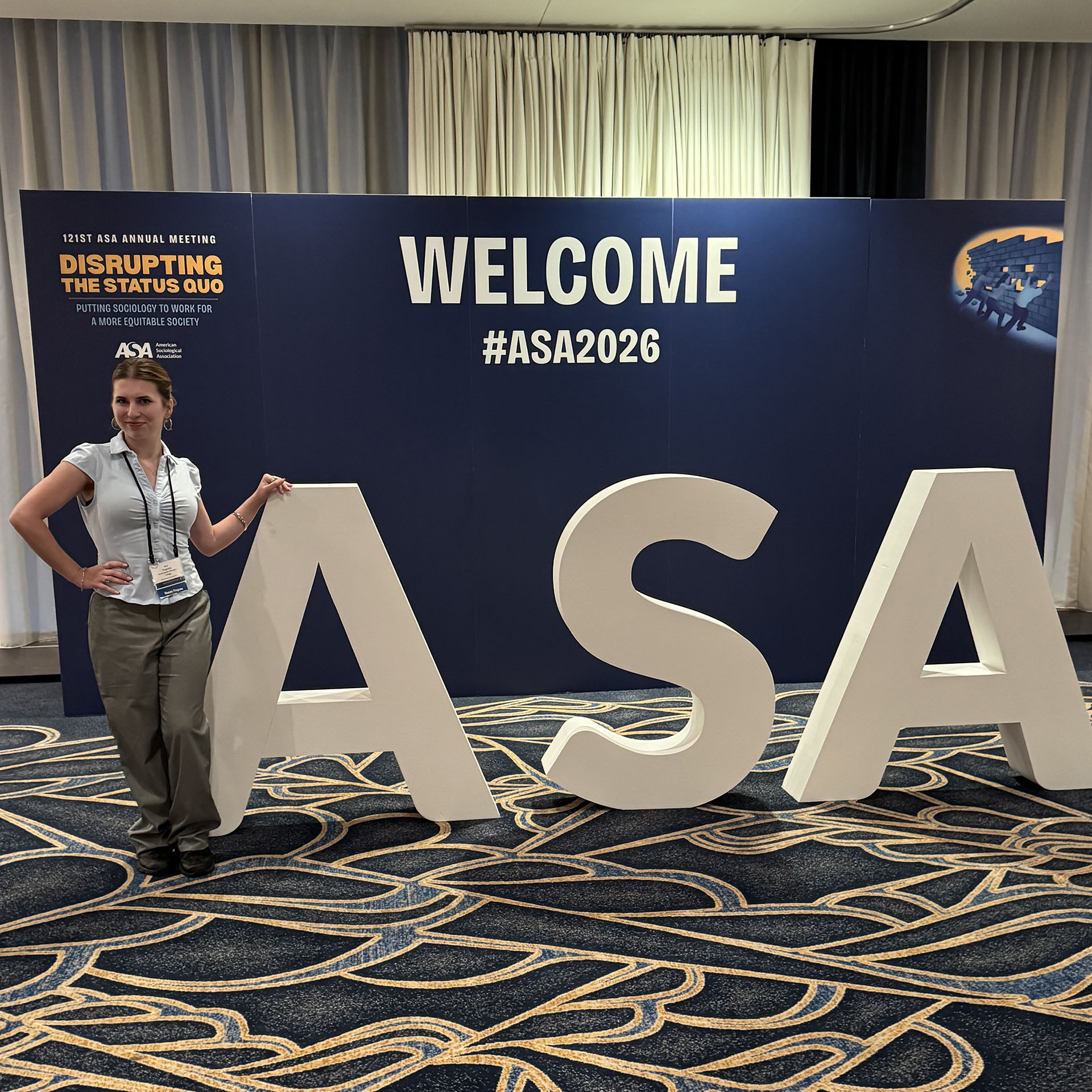
Other SMC travel opportunities to broaden students’ experiences include SkillsUSA for criminal justice, American Chemical Society meetings (most recently in New Orleans), Chicago psychology conferences and American Sociological Association meetings, such as this summer’s convention in New York City.